

Admin

27 Aug, 2014
SA’s trigger happy police
Media statement by Mr Bongani Msomi, UDM Secretary General Understandably so police brutality is an emotive issue in a country with our history. However, we never in our wildest dreams thought that, post-1994, we would again see brutal police violence. The United Democratic Movement (UDM) is concerned about the number of incidents of late of egregious police brutality and indiscriminate use of force. The ill-considered “shoot first-ask questions later” rhetoric by senior politicians and police officers sketches a bleak picture of a “new policing policy”. This is evidenced by Police Commissioner Riah Phiyega’s attitude towards the Marikana Massacre and now Free State MEC for police, Butana Kompela, has defended violent police action in Henneman where four alleged criminals were killed. The passing of Andries Tatane in 2011 and the death in 2013 of a Mozambican taxi driver after being dragged behind a police van – to name but two – are still fresh in our memories. When the families of Elais Thage and Tsholofelo Mothobi buried their children at the weekend much animosity was directed our police services. The UDM does not dispute that the police has a tough job and we support zero-tolerance to crime, but to laugh off police brutality makes a mockery of our laws and is immoral. Experts have said that it is not small number of officers who act illegally, but that the problem is systemic and widespread, and that it is going to keep on happening. In some instances communities feel justified in retaliating. Despite what our police leaders seem to be proponents of South Africa cannot tolerate a trigger happy police force. In this regard we believe that intensifying police training, especially in the code of conduct, and revisiting the curriculum to enhance overall levels of competence and capacity would be part of the solution. Those officers who make themselves guilty of abusing their positions of trust, should not be defended; they should face the full might of the law. We are hopeful that our new Minister of Police, Nkosinathi Nhleko, will well acquit himself of his job. The UDM however suggests that he institute a judicial commission of inquiry into police brutality to get to the bottom of this scourge.
Admin
26 Aug, 2014
Link between civil disobedience and poor service delivery
Government has blinkers on when it comes to the consequences of poor service delivery, particularly at local government level. Disingenuous representatives of government stand on their soapboxes shouting that they are doing their jobs. Judging by the volcano of protests against poor service delivery that erupts every now and again in all corners of the country, this is patently untrue. The United Democratic Movement (UDM) is of the view that government either willfully downplays incidents or meets service delivery protests with vicious action using its security organs to silence any dissenting voice. To add insult to injury the ANC brotherhood instantly closes ranks when it comes to criticism levelled at them – even if it is constructive criticism. Much of the civil disobedience we see is a symptom of poor service delivery and it also is a double-edged sword. On the one hand, one can hardly blame a frustrated citizenry – who have no water, electricity, etc. – when they demonstrate and protest. On the other hand, where does one draw the line? We after all do not live in a lawless society and those who break the law must be arrested, make their cases in court and accept the judgements if they are guilty. One can philosophise indefinitely, but there is a fine balance between action and reaction and once the precedence of unmitigated violence has been established it spirals out of control and becomes the norm. What however boggles the mind is: why does government (at all three tiers) refuse to see this and intervene timeously, or even better, do their jobs right in the first instance? It is statements such as “…we don’t know how long the committee will take…” (after Ekurhuleni Mayor Mondli Gungubele announced an audit into Daveyton residents’ housing complaints) that elicits chaos. The problems should have been proactively addressed and the mayor should have had his answers ready. Media Statement by Mr Bongani Msomi, UDM Secretary General
Admin
26 Aug, 2014
UDM on Provision of water and sanitation to our people and elimination of the bucket system
Address by Mr LB Gaehler MP in the National Council of Provinces in the debate on Local Government: “Moving with utmost speed to provide water and sanitation to our people and eliminate the bucket system” Honourable Chairperson Honourable Members The United Democratic Movement (UDM) supports attempts by government to increase the speed at which the restoration of people’s dignity by amongst others providing quality, clean water to the people and quality sanitation and eradication of the remaining bucket toilets in our communities. Surely we can’t afford to always shift the target on this matter as it borders on constitutional rights. The 2012 Fourth Quarter Statistic South Africa Report, revised in October 2013 and released in May 2014, reveals amongst others, the following important information on this subject. • Out of 90.8% of South African households with access to piped water in 2012, only 79% of Eastern Cape households enjoyed such access. Although, we agree that this is an improvement compared with 56.3% of 2002, this gap affects more the most vulnerable and impoverish rural citizens and further expose them to other opportunistic deceases when the health systems is also in a state of collapse. There delayed intervention in this regards has multiple other social and economic consequences. • Nationally, 60.1% of households rated the quality of water-related services they received as ‘good’. However, this satisfaction rate is lower than the 76.4% recorded in 2005. Residents of Free State, Mpumalanga and Eastern Cape are reported to have consistently been least satisfied with the quality of water. Once again, the poor quality of water has adverse consequences for the social and economic wellbeing of the people and in particular rural citizens of the mentioned provinces. • The percentage of households with no toilets or bucket toilets decreased from 12, 3% in 2002 to 5, 3% in 2012. Households in the Eastern Cape accounts for 13, 4%, Mpumalanga (6, 4%) and Limpopo (6, 3%) were reported to be most likely to lack access to toilet facilities or to still use bucket toilets. The former, Minister of Human Settlement in her response to the Human Rights Commission report on Water and Sanitation in March 2014 said, “as government we have tirelessly worked in our quest to restore our people’s dignity, through, amongst other things, the Bucket Eradication Programme…..phase one of BEP will see the eradication of buckets in formalised townships of the Free State, Eastern Cape and Northern Cape. ….these provinces have the highest volume of bucket toilets….phase two will ensure the eradication of buckets in each of the South Africa’s nine provinces”. These commitments, Madam Chairperson, must at all times guide government commitment to the restoration of people’s dignity. At the centre of this programme is the immediate attention to be given to water and sanitation infrastructure in terms provision, upgrading and of regular maintenance. In some instances you have taps in communities where there is not a drop of water. The current sanitation infrastructure crisis confronting the ordinary citizens of Makana Local Municipality as well as the reported water infrastructure syndicate in KZN must receive an immediate attention and intervention as they are but just a tip of an iceberg on what maybe a greater challenge in an attempt to move with speed and provide water and sanitation to the people and in particular the rural poor. This infrastructure improvement and maintenance must be designed such that they also create local job opportunities and skills development. If deliberately, skills are developed and transferred to local people, then maintenance of water generators and other related matters can be transferred to ownership of local people. This approach will also ensure effective and direct democratic participation of citizens at local level.
Admin
21 Aug, 2014
Question to the President: Nkandla saga
Question to the President: Nkandla saga by Mr Bantu Holomisa, MP and UDM President Honourable Speaker Mr President and Mr Deputy President, Ministers and Deputy Ministers Honourable Members Mr President, in the context of your report to the Speaker of the National Assembly, your posture, your claim of innocence and your commitment to correcting any wrongs that have been found and reported to by the various investigations into the Nkandla saga; Do you think you can, as head of state, make the work of the Ad hoc Committee easier by voluntarily presenting yourself to the committee and present your report in person? Thank you
Admin
15 Aug, 2014
Multi Party Forum on the decision of the Constitutional Court on the matter of the IEC Chairperson
Statement on behalf of the Multi Party Forum on the decision of the Constitutional Court on the matter of the IEC Chairperson We welcome the Constitutional Court decision on the matter of the Chairperson of the Independent Electoral Commission Advocate Pansy Tlakula. This decision vindicates the findings of the Public Protector and two other credible institutions that pronounced on the matter. We take our hats off to the whistle blowers who helped root out this maladministration and abuse of public monies. Advocate Tlakula and the African National Congress should hang their heads in shame and respect the decision of the highest court of the land.
Admin
24 Jul, 2014
Multi-Party Forum’s comment on appeal lodged by IEC Chairperson Pansy Tlakula
Statement issued by Mr Bantu Holomisa, MP – UDM President and Chairperson of the Multi-Party Forum We confirm that we yesterday received court papers as submitted with the Constitutional Court by the Chairperson of the Independent Electoral Commission (IEC), Advocate Pansy Tlakula. We have filed our answering papers. The political parties that are part of this action will be guided by the Constitutional Court and we hope that the matter will reach conclusion as soon as possible. In the meantime, we call on the Electoral Commission to deal decisively with the other recommendations of the Public Protector, amongst others that: • the disciplinary processes be started against all staff members who were fingered in Advocated Madonsela’s report; • the lease agreement, found dubious by no less than three independent and credible institutions, be cancelled. The Commission’s indecisiveness, regarding the implementation of the Public Protector’s findings and recommendation, make us doubt their commitment to the promotion of the ethics of good governance. The excuse advanced in the past about waiting for legal opinion must not be used to kick to touch
Admin
23 Jul, 2014
Budget Vote 33 – Rural Development and Land Reform
Address by Mr ML Filtane, UDM Member of Parliament, in the National Assembly – Vote 33 Rural Development and Land Reform Honourable Chairperson Minister and Deputy Minister Honourable Members • Rural revitalisation and intervention in its economy is a priority matter as many rural areas remain in crisis with regard to resources and service delivery whilst the majority of people live in abject poverty after 20 years of democracy. • One major flaw of economic policy in the last 20 years has been the failure to bring infrastructure in rural areas on par with that in the cities without urbanising rural settlement. The socio economic consequences of this flaw are what we continue to witnesses; chronic housing shortages, millions forced to live in shacks and many other social ills. • The Untied Democratic Movement (UDM) supports aggressive and radical intervention in rural development, which will ensure that this matter does not become a political football. • The post settlement land programme is not producing the desired effect. • Questions raised by the public during public hearings on legislation are still outstanding and we are not clear as to when will the department submit its responses. • The department shares a vision – “to create vibrant equitable and sustainable rural communities and food security for all” with the department of Agriculture, Forestry and Fisheries. However, the latest statistics on food security reflect that over 11 % or 5.6 million South Africans still live in abject poverty, with no food security at all. What does the department propose to do to improve this situation? • That the door has been opened for more land claims to be submitted, whilst the department is currently behind with the settlement of already validated claims, leaves one wondering how and when these new ones will be accommodated. The Annual Performance Plan of the Department for the financial season 2014/15, targets to finalise 239 claims out of 983 outstanding and yet it is quite on how and when the 744 is going to be finalised. The fact that the department has reported staff shortage and limited budged, the question remains – will this just be a populist statement or are there some pragmatic plans to address this apparent problem? • The outstanding claim by the people of Baziya in the Eastern Cape leaves bitter taste in their months even to this hour. We invite the department to supply sufficient account of this prolonged delay. • Land reform – my biggest concern here is that, there is no statistical report on the socio economic achievements over the previous term and yet funds continue to flow to this function. • There is an urgent need for management to eliminate the inconsistencies between the department’s Annual Performance Plan and its own targets as well as to adhere to the prescribed reporting periods. • The department’s model for economic development is not comprehensive enough hence it is lacking in sustainability, some critical basic elements are missing from the equation. • Land acquisition by foreigners needs to be capped at a certain percentage of our land. Even so, we need to look at the value-adding factors which the acquirer will bring to the country’s broader objectives like; long term employment, skills development and provision of food security. • The UDM notes with concern the huge transfers of public funds to the Ingonyama Trust and we hope the Department will report on this matter. The UDM supports budget vote 33. Thank you
Admin
07 Jul, 2014
Land redistribution in South Africa
Statement in Parliament by Mr LB Gaehler, UDM Member of Parliament Honourable Chair and Honourable Members Land redistribution aims to correct the injustices of the past. The Natives Land Act of 1913, a piece of legislation which ratified and legalized the exclusion of South Africa’s black majority from land ownership in favour of the white minority. This has left behind a legacy of both dispossession and oppression. Citizens however have voiced out their grievances, post 1994, with regard the lack of post-settlement support, creating a situation where some individuals have had to sell back land given to them by government. The United Democratic Movement firmly believes that land should be restored to their rightful owners with support and skills development, so there is no uncertainty and tension. When this is done, we believe that the needs of South African farmers need to be prioritized by developing policies to subsidize farmers that will enable them to fairly compete against their international counterparts. We believe in the creation of the necessary infrastructure that will create jobs and encourage the growth of more employment-creating agricultural-related enterprises to ensure that migration to urban areas is slowed down. Build infrastructure to support agricultural activity, such as irrigation schemes that have been proven to be successful in the past. One stop Agricultural Service Centres should be established in rural areas, where emerging farmers can ask for advice, veterinary services, access the necessary tools and knowledge to run their farms as businesses and also have a market for their produce. I thank you
Admin
28 Apr, 2014
IEC lease agreement scandal – IEC paying for Commission Chairperson’s legal costs
Memo to: Mr Terry Tselane, Vice-Chairperson of the Electoral CommissionFrom: Bantu Holomisa (Chairperson of the Multi-Party Forum and UDM President) Copied to: Judge Thami Makhanya, Rev. Bongani Finca, Ms Raenette Taljaard, Advocate Thuli Madonsela, leaders and representatives of other political parties ===================================== Dear Mr Tselane The abovementioned matter has reference. The Electoral Commission is on record that it has accepted the Public Protector’s report 13 of 2013 captioned: “Report on an investigation into allegations of maladministration and corruption in the procurement of the Riverside Office Park to accommodate the head offices of the Electoral Commission in 2011”. It is also a matter of public record that Commission Chairperson Pansy Tlakula has in her personal capacity lodged papers at the Pretoria High Court to review and set aside the Public Protector’s findings and recommendations against her. This was confirmed at a meeting between the Independent Electoral Commission (IEC) and the Multi-Party Forum on 1 April 2014. We have received information that the Chief Electoral Officer (CEO), Mr Mosotho Moepya, has allegedly paid R500 000 from the IEC’s coffers to pay for Advocate Tlakula’s legal fees. We herewith enquire if the Commission is aware and/or has approved the expense. If it is indeed aware and/or has approved these expenses, how does the Commission justify its decision whilst Advocate Tlakula has engaged in these legal battles in her personal capacity and on basis was such a large amount paid even before the review has commenced? Two credible organisations have fingered this person as having done irreparable damage in terms of the IEC lease agreement i.e. no value for money, and yet she has the audacity use state moneys to fight her personal battles. We hope to receive your response to this enquiry by the end of this week. Yours sincerely Bantu Holomisa, MP UDM President and Chairperson: Multi-Party Forum
Admin
10 Apr, 2014
Human rights: women and children in mining communities in need of urgent help
His Excellency, Mr JG Zuma, President of the Republic South Africa The Minister of Social Development Chairperson of the South African Human Rights Commission Chairperson of the National Council of Churches This matter has reference. I recently visited many of the surrounding mining townships and villages in the North West and Limpopo – amongst others, Marikana, Impala No 9, Ntabeni and Smasha Block. The women and children of these communities are worse affected and are quite literally starving. Families explained that in the past their children were given food on a daily basis at their schools and that this is no longer the norm. Because family members have gone on strike, children go to school hungry, return home hungry and mothers and fathers are unable to buy food. I suggest that delegates from the Presidency, the Ministry of Social Development, the Human Rights Commission and the National Council of Churches go to see for themselves the dire situation these communities are in. We call on you to help these women and children on humanitarian grounds. Should you need any additional information please contact my office Regards Bantu Holomisa, MP President of the United Democratic Movement
Admin
09 Apr, 2014
Holomisa pays tribute to a friend and comrade on the 21st anniversary of Chris Hani’s assassination
The United Democratic Movement (UDM) pays tribute to a friend and comrade, the late Chris Hani, on the 21st anniversary of his assassination. The unwarranted murder of Chris Hani robbed South Africa one of its most charismatic and principled sons thus drastically changing the course this country would have taken. Hani’s unshakable belief in the eradication of poverty, prosperous and corruption free South Africa, amongst many other noble ideas, would have undoubtedly steered this country firmly towards the original values as enshrined in the constitution. We must never forget, as we look back towards the tragic moments of his brutal killing, that his untimely death united our people who became more resolute that our freedom could no longer be delayed. However, 20 years later corruption is now pulling the rug right under our feet. The promise of that freedom and the dream of 1994 of re-construction and development, and better life for all, has become illusive for the majority. We in the UDM believes that South Africa today requires a leader, like Hani, who has a passion for the poor, justice, equality – and therefore the love of a nation. South Africa yearns for a true and steadfast leader whose belief in integrity, the unity and prosperity of our people will touch millions in this country. In commemorating Hani’s life we remember him with fondness believing that he had planted enough seeds for South Africa to be able produce another outstanding leader like him during these troubled times.
Admin
04 Apr, 2014
UDM writes to Chairperson of the Joint Standing Committee on Intelligence to request urgent meeting to quiz origins of the so-called Intelligence Report
Dear Mr Nqakula REQUEST FOR URGENT MEETING: JOINT STANDING COMMITTEE ON INTELLIGENCE The above matter refers. In my capacity as a member of the Parliamentary Joint Standing Committee on Intelligence, I request that you convene an urgent meeting of the Committee to consider the widely reported and circulated ‘Intelligence Report’ [the Report] that purportedly has been the central reason for the change of leadership in the National Treasury. In order for the Committee to be able to consider this matter and deliberate, I further request that you direct the Minister of State Security, Mr David Mahlobo, and his Director General, to attend the meeting and brief us on the following, amongst others: 1. Whether the Report is a product of our local intelligence agencies? 2. Whether the Report is a product of foreign intelligence agencies? 3. Whether the Minister is satisfied with the origin and substance of the Report and, if so, to give the Committee further details? You will certainly appreciate the negative impact the Report has had on our economy and the Country’s subsequent downgrading to junk status. I hope you find this request in order and urgent. Yours sincerely Mr Bantu Holomisa, MP President of the United Democratic Movement
Admin
02 Apr, 2014
Nkandla: President Zuma sidesteps the issue
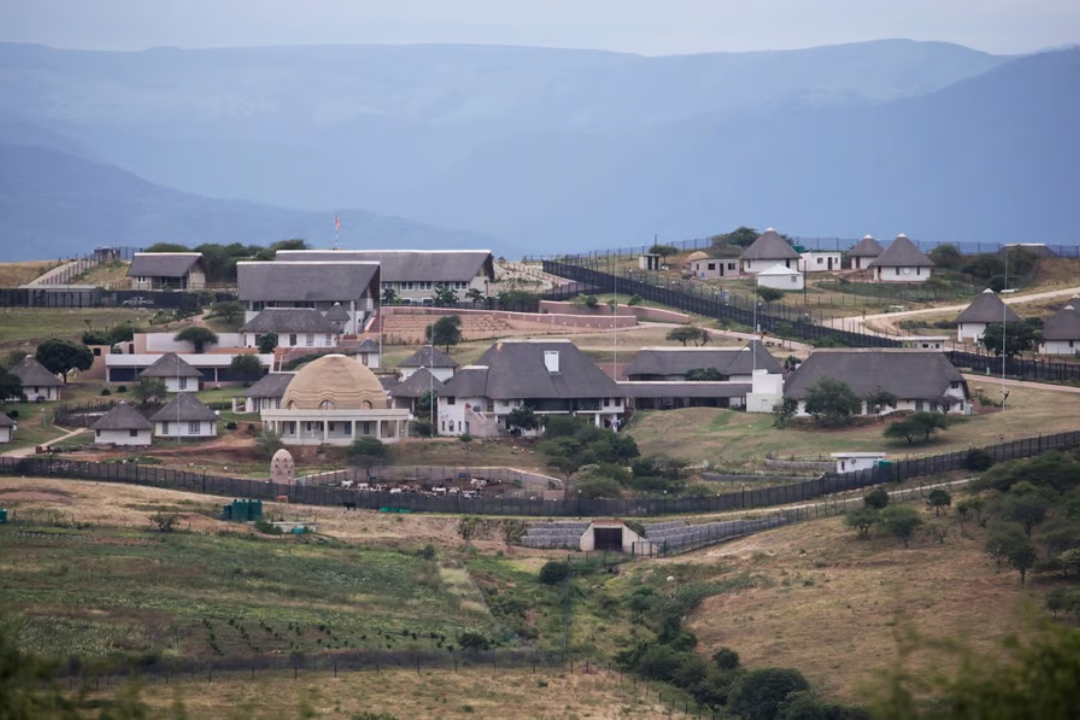
The United Democratic Movement is disappointed, but not surprised, that President Zuma has once again side-stepped the issue of Nkandla in a desperate attempt to kick for touch. His response, as articulated by his spokesperson Mr Mac Maharaj, is inadequate and almost contemptuous of the Public Protector’s office. It is an indication of how little respect they have for the Public Protector as an institution that derives its power and legitimacy from our constitution. The President, consistent with his party and his government’s views, continues to put the inter-ministerial report, and now the police and the Special Investigating Unit (SIU), at the same level as the office of the Public Protect or. The inter-ministerial report places the president and government as a judge in their own case. This is unacceptable. No other intuitions can be considered more credible than the office of the Public Protector. The president must not hide behind the SIU, whose work and credibility cannot be equated with that of the Public Protector. We will rally all opposition parties to respond adequately to these delaying tactics of the president.
Admin
08 Mar, 2014
Holomisa on Amcu strike: Call for both parties to give face-to-face negotiations another try
With Implats’ announcement that it would consider abandoning its new R11bn Leeuwkop platinum mine, unless it could redesign it as a mechanised mine, is bad news for South Africans who are desperate for work, especially from nearby communities. The United Democratic Movement (UDM) is of the view that “go-betweens” are not the way to go. As former members of the National Union of Mineworkers (NUM) – still smarting from the loss of NUM’s status as the strongest union – they have a petty interest in ensuring that this dispute is never resolved. There is also an element of the ruling party elite, as BEE deployees, who are hindering progress. The strike has gone on for too long and inevitable retrenchments are looming. With a clear understanding of the plight of mineworkers, the UDM urges the Association of Mineworkers and Construction Union (Amcu) and the management of Implats, Anglo Platinum and Lonmin to give face-to-face negotiations another try.
Admin
24 Feb, 2014
Joint Statement by Mbhazima Shilowa and Bantu Holomisa
Today marks yet another milestone in our journey towards political realignment. Our announcement takes forward the discussions which started after the 2009 elections when it became apparent that South Africans yearned for a viable alternative. This process had stalled, in part, as the Independent Democrats (ID) joined the Democratic Alliance (DA) and the internal ructions with the Congress of the People (COPE). Recently, more than 800 delegates representing COPE branches from eight provinces that were left out of COPE’s recent National Congress held a summit in Bloemfontein to map the way forward. The summit mandated Mr Mbhazima Shilowa to engage with the United Democratic Movement (UDM) to take the realignment debate forward. The result of the talks between the two delegations was that these branches will support and mobilise for the UDM in the forthcoming general elections. The process of integration and preparing an effective elections machinery across the country is currently under way with joint meetings at provincial levels. A national structure to oversee this process has been put in place. The long-term plan is to work for political realignment and this entails that we will work with other progressive formations in the future. No party in South Africa can ever win an election unless it appeals to the vast majority, especially the poor and unemployed who do have not access to basic services. As outlined in the UDM’s manifesto it is imperative that we focus on the following issues: • Good governance. • Economy • Quality education • Feeding SA – food securing and rural development • Quality health care • Safety and security • Protecting the environment and • Election reform We call on all South Africans, especially those who voted COPE in the last elections, to rally behind the UDM in the forthcoming elections. While Mr Shilowa will not be party to such integration for personal reasons, he supports the process and will actively work for its success in the short, medium and long term. This is our country let’s take charge and not allow corruption to destroy the gains of our freedom. Thank you Mr Bantu Holomisa, MP Mr Mbhazima Shilowa
Admin
09 Dec, 2013
Mandela was born to lead: Holomisa
Congress of Traditional Leaders of South Africa (Contralesa) President, Chief Phathekile Holomisa says former president Nelson Mandela was born to lead. Holomisa says Madiba’s elders from the Abathembu Tribe, never anticipated that he would lead the country one day. Madiba passed away on Thursday night at his house, Houghton, Johannesburg. Holomisa says: “As an adviser, councillor to the Kings he was playing a critical role in the royal councils of Abathembu and I am sure the elders never anticipated that he will be a leader beyond that stature, so he fulfilled their hopes and expectations more than they had held then. He was born to lead. In fact when he went away from the Mthembuland to the City of Johannesburg, he naturally became a leader.” On Sunday, different prayer services were held for former statesman in South Africa and in other parts of the world. United Democratic Movement leader and Mandela family member Bantu Holomisa attended a prayer service at Regina Mundi in Soweto. Holomisa described Madiba as a man who fought for the country and encouraged South Africans to continue to embrace his legacy. Holomisa also made it clear that there won’t be any violence after Madiba’s funeral. “South Africans have proven wrong the international world that there will be violence in the country. There won’t be any violence in South Africa.” An official memorial service for Madiba will be held at FNB stadium on Tuesday and he will be buried in Qunu, Eastern Cape on Sunday.
Admin
08 Oct, 2013
Minister Nzimande’s failure to address problems at the Walter Sisulu University is jeopardising futures of Eastern Cape youth
Member’s Statement by Mr Nqabayomzi Kwankwa, MP and UDM Deputy Secretary General, in the National Assembly regarding Minister Nzimande’s failure to address problems at the Walter Sisulu University is jeopardising futures of Eastern Cape youth The United Democratic Movement (UDM) is very concerned about the manner in which Government and the Minister of Higher Education are handling the crises at Walter Sisulu University (WSU). If not for the intervention of civil society, under the leadership of the South African Council of Churches, the current crisis would have escalated beyond the point of no return. It is an indictment of Minister Nzimande that our President had to dispatch Minister Chabane to clean up his colleague’s backyard. However, after an agreement was reached to end the seven-week long strike, we hear that classes are disrupted yet again. The allegations are that Government is negotiating in bad faith and has reneged on its promises. The UDM is of the view that the Minister Nzimande has failed to attend to the WSU challenges, which include, but are not limited to: Not intervening in the labour dispute timeously; Not reporting on his Departments’ turn-around strategy for the university; Whether its budget allocation is adequate; Whether the salaries of academics and workers are competitive; Allegations are that local companies are overlooked for university business; § Whether the merger of various institutions has delivered the desired results. The UDM calls on Government to urgently resolve the crises at WSU, because a day lost in a student’s learning, is a day too many.
Admin
08 Oct, 2013
Tribute to the late Mr Krakrayo Simayile
Tribute by Mr Bantu Holomisa, MP (UDM President) to the late Mr Krakrayo Simayile, a loyal UDM member, at the Langa Sports Complex, Cape Town on Wednesday, 04 September 2013 Programme Director, The Simayile family; in particular his wife and children, UDM NEC Members, Provincial Executive Members of the UDM in the Western Cape, Distinguished guests, UDM Members, Ladies and gentlemen, On behalf of the United Democratic Movement (UDM), I wish to extend our heartfelt condolences to the family and friends of the late Mr Krakrayo Simayile. Our hearts go out to you during this difficult time. Mr Simayile or Noderi – as he was affectionately known – was a long-serving member of the UDM. He worked hard to build and grow the UDM in the Western Cape. He witnessed the murders and killings of many of our members in this Province for political reasons, without any of the perpetrators being brought to book. It is sad that today we have come here to pay our last respects to him under circumstances where there is no indication whether the people responsible for his death have been arrested. In hindsight, it would appear that we erred when we agreed to adopt the current provincial system instead of creating a unitary state. The general feeling is that the provincial system perpetuates the same evils we were trying to avoid in the former homeland system. Apart from being costly and being an administrative nightmare, the provincial system is constructed along the same racial and ethnic lines of the old homeland system. KwaZulu-Natal is for Zulus, while the Eastern Cape is for Xhosas, and so on. Here in the Western Cape you get an impression that National Government is treating this Province as if it is a federal state. For instance, I fail to understand how Ministers with national competence are always reluctant to monitor whether funds allocated to this Province are indeed being used for the betterment of the lives of the poor and previously disadvantaged communities. What stops President Zuma from calling a meeting with the Premier Zille and ask her to account for her government’s dismal service delivery performance in disadvantaged communities? It seems the governing parties are only content to use the poor and disadvantaged communities in this Province as voting cattle. One wonders whether the time has not come to review the current provincial system with a view depoliticise service delivery. I thank you.
Admin
08 Oct, 2013
WSU crisis Stakeholder Meeting
Address by Mr Bantu Holomisa, MP ( UDM President) at the WSU crisis Stakeholder Meeting at Mthatha High School Stadium on Monday, 02 September 2013 Programme Director and Ladies and Gentlemen, At the funeral of the late Mr Tsengwa in Willowvale a few years ago, Bishop Mbethe expressed feelings of great sadness about the dreadful state and poor quality of our education in the Eastern Cape. His lamentation was prompted by the continuous poor matric performance of the Eastern Cape Province. He summed up the importance of education in the Eastern Cape as follows and I quote: “The Eastern Cape is not endowed with gold, but its gold has over the always been the good quality of its education.” I guess it is precisely because of this reason that the people of this Province heeded our call to meet here today to discuss and find solutions to the challenges facing Walter Sisulu University (WSU). WSU challenges are as old as our democracy itself. This university has long-standing problems, which have been allowed to recur ceaselessly. I therefore hope that our discussions today will go a long way towards identifying and solving some, if not all, of WSU’s challenges. You will recall that this meeting is an outcome of requests for my intervention from concerned parents, students, members of the public and other stakeholders about the challenges at WSU. After I was inundated with these requests, I wrote a letter to President Zuma, asking him to set up a task team to look into the crisis at WSU. President Zuma is however yet to respond to my letter. The inordinate amount of time he is taking to respond prompted me to propose today’s meeting. I took this decision because it appears that salary negotiations between the Department of Education and WSU management and employees have deadlocked and there seems to be no resolution in sight. Even last week, Mr Qonde, the Director General of the Department of Higher Education refused to alter the Department’s stance. Nor has he even tried to meet the workers halfway on their demands. His primary argument is that WSU management and employees are paid more than workers doing the same jobs at other universities. Needless to say, the crisis at WSU negatively affects the quality and access of students to education. This is more so when one considers Government’s bizarre decision to close the university. Has Government thought about what is going to happen to the students who come from other Provinces? I would therefore like to take this opportunity to urge all of us here today to working together towards finding short, medium and long-term solutions to the crisis at WSU. The role of authorities is particularly important in this regard. However, we should not hesitate to take the legal route should we sense a tinge of intransigence on their part. As we now ready ourselves for our discussions, we should do so mindful of the fact that we are not a labour court, nor are we a bargaining council. Ours is to help restore stability and normality at WSU. You will recall that I when I called for this meeting I proposed that it be presided by the South African Council of Churches (SACC). I am now going to hand over the meeting to them. But before I do so I wish to thank the UDM King Sabatha Dalindyebo (KSD) Municipality Councillors for sponsoring the marquee and the chairs for this event. I now hand the meeting over to the South African Council of Churches and in doing so wish the meeting the greatest success! I thank you.
Admin
08 Oct, 2013
Marikana Commemoration
Address by Mr Bantu Holomisa, MP (UDM President) on Marikana Commemoration on Friday, 16 August 2013 at Marikana Programme Director, Church and union leaders, Leaders of political parties, Mining management, Community leaders, The workers and people of Marikana 16 AUGUST 2012 I stand here and I remember when we heard the terrible news of what happened on this very soil on 16 August 2012. Indeed the South African Council of Churches (SACC), under the leadership of Bishop Jo Seoka, and the leaders of political parties visited this community to pay our respects and to hear what it was that happened. You will recall that we left here with the advice that the SACC should not leave this community to fend for itself and we are thankful that you have stayed your course. We again plead with you to not leave this area without having made sure that this community has access to proper housing, schools, roads, clinics, crèches and above all until the citizens of this country go to an Economic Indaba that will address the skewed distribution of resources which have benefited a selected few and only some regions. If we had strong civil society, after Government’s botched handling of this situation, we would have had a plan of action in place, with specified deadlines, that insured that this community received the care and services they need to have an acceptable standard of living and the disputed funding of legal representatives would not be an issue. WE MUST NEVER HAVE A REPEAT OF THIS TRAGEDY If it had not been for the harsh reality, one would not have believed that we lived in a new South Africa where it was possible for nearly 80 South Africans to be injured, and 44 to die, in one day, in a conflict between a people and their government. A year has passed and this community still has a long way to go to find healing. You still have much heartache, frustration and disappointment to process, because of not only what happened on that fateful day, but also what happened thereafter. This community, and those who find employment on the mines across South Africa, have however proved that we as a Nation have an innate strength and resilience. You have shown that we will not be defeated by that which is wrong; that we can rise from the ash, dust and grime; and that we are willing to work to find mutual trust and a brighter future for all our people. To the families, friends and colleagues of those who were injured and had lost their lives, it is not only important that we find peace in our hearts, but also peace in this community and in the workplace. I hope that all the people who form part of this community, employer and worker alike, will soon find each other. We therefore congratulate the Association of Mineworkers and Construction Union (Amcu) and the mine management for their continued willingness to engage with one another to talk about a solution that will benefit all. CONCLUSION We will never forget what happened here, but I am sure we can all agree that some good must come from this tragedy. Things must change for the better. On behalf of the United Democratic Movement, I commiserate with those who were left behind and we appeal to all concerned, to work hard to find common ground and above all, let us never-ever have a repeat of what happened on 16 August 2012. I thank you.
Admin
08 Oct, 2013
Bestow the Freedom of the City of Johannesburg on the leaders of the 1956 Women’s March
Address by Cllr Thandi Nontenja, UDM Councillor in the City of Johannesburg at Special Council Meeting to Bestow the Freedom of the City of Johannesburg on the leaders of the 1956 Women’s March on 15 August 2013 Council Chambers Madam Speaker Executive Mayor Members of the Mayoral Committee Mama Sophie de Bruyn Families of the recipients Fellow Councillors Ladies and Gentlemen The United Democratic Movement (UDM) joins you in saluting the brave women who marched in 1956 to petition against legislation that required Africans to carry the pass during the apartheid era. We are to this day amazed by what those twenty thousand women did as they marched to the Union Buildings at a point in time when people went to jail for less. Their march was a significant step towards gender equality in South Africa. Under the inspired leadership of people such as Helen Joseph, Rahima Moosa, Lilian Ngoyi and Sophia Williams-de Bruyn, the women of South Africa showed their resilience, political will and female solidarity. As we celebrate Women’s Month, we must however admit that we have not achieved our mission, because gender bias and discrimination remain an unfortunate factor in our country. Today’s women are faced with much more daunting challenges like HIV/AIDS, domestic violence, poverty, rape, etc. Unless as South Africans we take drastic steps to correct the social ills that are glaring in the various sectors of our society, the struggle of these courageous women will be in vain. As women leaders we must take responsibility for the legacy left by these courageous women of 1956 and blaze the trail for those who come after us. We cannot disappoint the women who passed the baton to us; and we cannot fail our girls and their daughters. Tomorrow, as we commemorate the Marikana Massacre; we share the pain and anguish of our sisters and daughters who lost their loved ones. We hope that justice will eventually prevail. The UDM is in support of bestowing the Freedom of the City of Johannesburg on bomama Helen Josephs, Rahima Moosa, Sophia Williams de Bruyn, Lillian Ngoyi. Wathint’ abafazi wathint’ imbokodo Thank you.


